
Garage Door Spring Repair in Southlake, TX
Call (817) 646-5612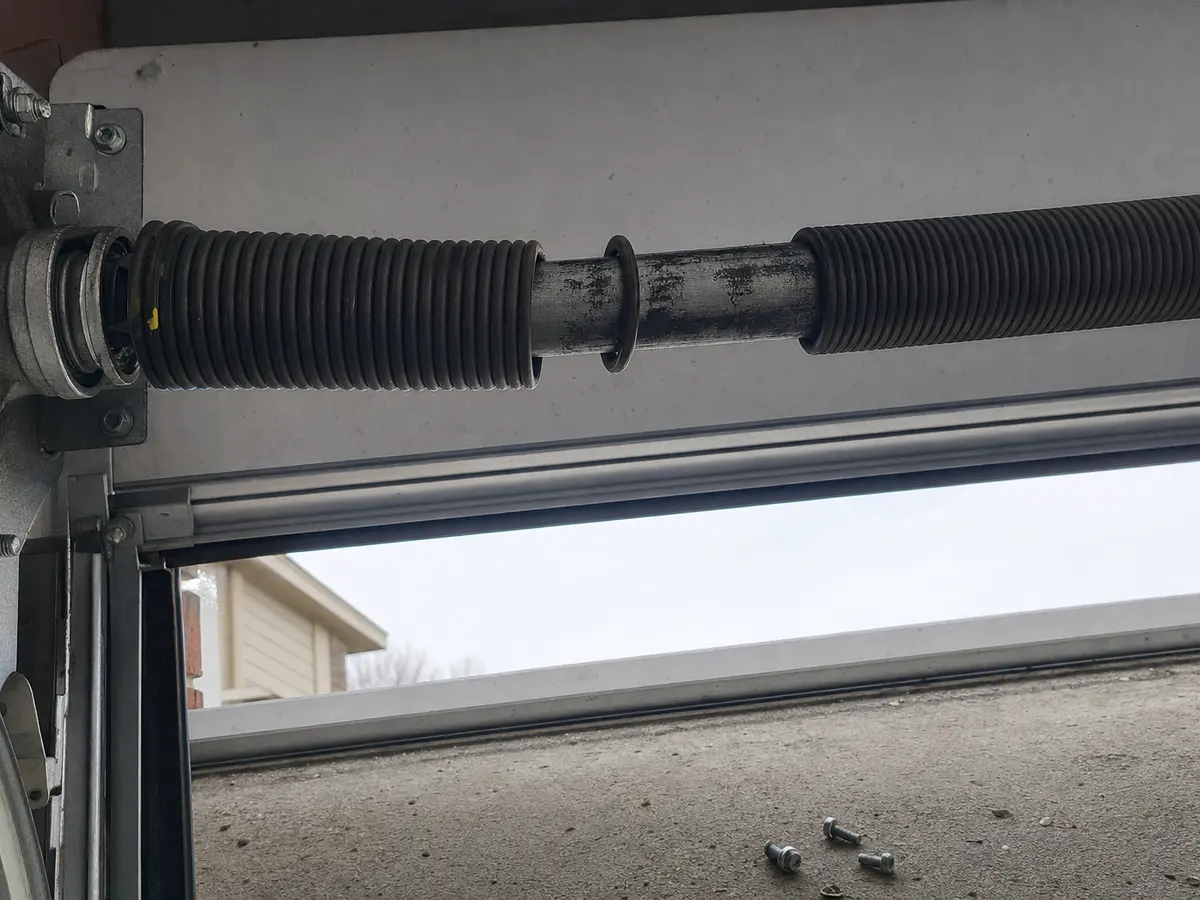
A broken garage door spring stops your day immediately. The door is too heavy to lift by hand and the opener cannot do it alone. We repair and replace torsion and extension springs in Southlake, TX with same-day service available on most calls. Call us and we will tell you what the repair involves before we arrive.
What a broken spring looks like
You probably heard it. A torsion spring that snaps makes a loud bang, sometimes described as a gunshot or a heavy box falling off a shelf. If you were away from home when it happened, here is what you will notice when you try to open the door: it rises four to six inches and stops, or the opener strains hard and the door barely moves. If you pull the emergency release cord and try to lift the door by hand, it will feel like it weighs 200 pounds. A door with a working spring should feel almost weightless when you lift it by hand, because the spring is doing most of the work.
Other signs: a visible gap in the spring coil. A broken torsion spring will have a two- to three-inch separation in the coil where the metal gave way. The door may also open unevenly, with one side lower than the other, if only one spring broke on a two-spring system. The opener may run the full cycle but move nothing, because without spring tension there is nothing to assist it.
If your wall button still works but nothing moves, check the spring above the door before calling an opener repair company. Nine times out of ten, the spring is the problem, not the opener.
Torsion springs and extension springs
Most homes built in Southlake from the 1990s onward have torsion springs. These are the horizontal springs mounted above the door on a metal shaft that runs across the header of the garage opening. Torsion springs are wound under high torque and release that energy to lift the door. They last longer than extension springs and are generally quieter in operation.
Extension springs run parallel to the horizontal track sections on each side of the garage. They stretch and contract as the door moves. Extension springs are common in older construction and in garages with low headroom where there is not enough clearance for a torsion shaft. When they break, a spring without a safety cable through it can snap across the garage with real force. If you have extension springs and they do not have a steel safety cable threaded through the coil, we recommend adding them when we do the repair.
We carry common residential sizes for both types. Most garage door spring repairs in Southlake do not require ordering parts. We stock the most frequently needed sizes and can usually handle the job on the first visit.
How long springs last
Standard residential torsion springs are rated for about 10,000 cycles. One cycle means the door goes up and comes back down. If your household uses the garage door about four times a day, you go through around 1,500 cycles a year. At that rate, a standard spring lasts about seven years.
A busier household, or one with a three-car garage where multiple doors cycle throughout the day, may see springs fail in five years. High-cycle springs, rated at 20,000 or more cycles, are available as an upgrade and are worth considering if you use the garage frequently. The cost difference at installation is small compared to the cost of a second repair call in a few years.
You can check your spring's cycle rating by looking at the end of the spring for a colored paint mark. Spring manufacturers use color codes to indicate the rating. We can tell you what your current spring was rated for when we arrive, and give you the option for a standard replacement or a high-cycle upgrade.
What's the average cost to replace a garage door spring?
Torsion spring replacement in the Southlake area includes parts and labor. That price typically covers both springs on a double-spring setup — replacing one spring when the other is near end of life is standard practice, and most technicians will not replace just one. Extension springs generally run cheaper than torsion per spring installed. A full set of extension springs on a two-car door costs more than a single spring.
High-cycle springs, rated for 20,000 cycles instead of the standard 10,000, cost a little more per spring and are worth considering if you use the garage door four or more times a day. The extra cost at installation is much smaller than the cost of a second service call in three to four years. Call us for a specific estimate.
Can you manually lift a garage door if the spring is broken?
Yes, but the door will feel extremely heavy, roughly 150 to 200 pounds on a standard two-car garage door. The spring does most of the lifting work, and without it you are carrying the full weight of the panels. To open the door manually, pull the red emergency release cord hanging from the trolley rail to disconnect the opener drive. Grip the door at the bottom with both hands and lift straight up.
Some people can do this once to get a car out of the garage, but it requires real effort and creates a back injury risk. Do not attempt to lift the door while it is off-track or visibly damaged. Once the car is out, leave the door down and do not use the opener until the spring is replaced. Running an opener with a broken spring puts extra strain on the motor and can damage the drive gear.
Why is garage door spring replacement expensive?
The cost reflects the skill and equipment involved, not the spring itself. A standard torsion spring is inexpensive at a hardware store. The labor covers the work required to handle it safely. A torsion spring under full tension holds 150 to 300 foot-pounds of torque. Unwinding and re-winding it requires a steel winding bar inserted into the winding cone and controlled by hand while the spring is live. If a winding bar slips, the spring releases that energy suddenly. This is why DIY spring replacement produces injuries.
The technician also needs to measure your spring precisely. Wire diameter, inside diameter, and length all determine the torque output. A wrong-sized replacement will not balance the door correctly, which shortens the life of the opener and the new spring. The price reflects the combination of physical risk, specialized tools, and the accuracy required to size and install the replacement correctly.
How long does garage door spring repair take?
Most torsion spring replacements take 45 minutes to an hour and a half from arrival to departure. A single-spring job on a one-car garage door runs about 45 minutes. A two-spring replacement on a larger door takes closer to 90 minutes. If a cable snapped when the spring broke, which happens, add 20 to 30 minutes for the cable replacement.
Springs that caused the door to fall or jam in the tracks can add time depending on what needs to be realigned before the spring work can begin. Call us and describe what happened. We can usually give you a realistic estimate of how long the job will take before we arrive, so you can plan your schedule. Most calls in Southlake are same-day.
Why this is not a DIY repair
Torsion springs carry anywhere from 150 to 300 foot-pounds of torque when wound. Unwinding and re-winding them requires a steel winding bar inserted into the winding cone and controlled by hand while the spring is under tension. This is not a tool you find at a hardware store, and it is not a technique you learn from a video on your first attempt. We see injuries from DIY spring repairs regularly. In most cases the person watched a video, got through half the job, and then something moved unexpectedly.
The spring itself is not the expensive part of this job. The labor reflects the skill and equipment required to handle the tension safely. Hiring a tech to do it costs less than an emergency room visit and a door that needs additional repairs because the spring snapped during a failed DIY attempt.
How we handle the repair
We arrive, inspect the broken spring and the rest of the door hardware, and give you a price before we begin. If only one spring broke on a two-spring setup, we replace both. The surviving spring has been cycling just as long as the one that broke and is near end of life. Replacing both at the same visit saves you a second service call within the next year.
We unload the tension from the remaining spring first, then remove the broken spring and measure it. Spring sizing matters. Wire diameter, inside diameter, and length all determine the torque the spring produces, and a wrong-sized replacement will not balance the door correctly. We install the correct replacement, wind it to manufacturer specifications, and test the door balance by hand before reconnecting the opener.
If the broken spring snapped a cable during the break, which happens, we replace the cable at the same time. A frayed or kinked cable that absorbed the shock of a spring failure is not reliable and should not stay on the door.
Before we leave, we put the auto-reverse through a real test: with the opener running, we block the door's path and confirm it stops and reverses the way the safety system is meant to. A spring job that balances perfectly still is not done until that reversal is verified.
Spring repair in Southlake: what the numbers actually mean
Garage door springs are rated by cycle count. A standard torsion spring rated for 10,000 cycles lasts about 4.5 years on a door used 6 times per day. A high-cycle spring rated for 30,000 cycles lasts around 13 years at the same usage rate. Most homes in Timarron and Stone Lakes were built between 1995 and 2012 with 10,000-cycle springs. Many of those springs are now at end of life.
We measure the existing spring before ordering a replacement. The three measurements that matter are inside diameter, wire diameter, and overall length. A spring wound to the wrong spec will not lift the door correctly. The door will feel heavy by hand and the opener will strain on every cycle.
Torsion vs. Extension: Which Type Is On Your Door
Torsion springs run horizontally above the door on a steel shaft. Most Southlake homes built after 2000 use torsion springs. Extension springs run parallel to the horizontal track sections on each side of the door. They are found more often on older 1-car garage setups and on some homes built before 1998 in Stone Lakes.
Torsion springs store energy by twisting. Extension springs store it by stretching. When an extension spring breaks, it can travel several feet if the safety cable running through it is missing or broken. We install safety cables on every extension spring we replace.
The Replacement Process
We never replace just one spring on a two-spring system. If one spring is broken, the other has logged the same number of cycles and will fail within weeks. Replacing both at the same visit costs less than two service calls.
The process: release all remaining tension from the broken spring using winding bars (never a screwdriver or drill). Remove the broken spring from the shaft. Measure and confirm the replacement spec. Install the new spring, wind it to the correct turns-of-wind based on door height and weight. Test door balance by disconnecting the opener and lifting manually to 3 feet. A properly balanced door stays at 3 feet without drifting up or down.
If the door drifts down, the spring is underwound. If it rises on its own, the spring is overwound. We adjust before reconnecting the opener.
Timarron and Stone Lakes: What Age Means for Springs
Timarron construction ran from 1992 through the early 2000s. The older sections of Timarron near Byron Nelson High School have homes with 25-year-old spring assemblies. We see multiple spring failures per month in this corridor during winter months, when temperature drops increase spring brittleness.
North Texas temperatures swing through big seasonal extremes across the calendar year, from cold winter mornings to hot triple-digit summer afternoons. Repeated thermal cycling causes metal fatigue in springs over time. Springs on the north side of a home (less sun exposure, more condensation) tend to fail earlier than those on south-facing garages.
Stone Lakes homes built between 2000 and 2005 are entering the zone where original 10,000-cycle springs are due for replacement. A spring showing a gap between coils is already partially unwound from a partial break. That gap is not a cosmetic issue. The remaining coils are carrying the load that the separated section no longer handles.
Spring Repair Timing and Expectations
A standard torsion spring replacement on a single-car door takes 45 to 60 minutes. A two-car door with two torsion springs runs 60 to 90 minutes. We carry the most common spring sizes (wire diameters from .207 to .283, inside diameters of 1.75 and 2 inches, lengths from 24 to 36 inches) on the truck. We measure on arrival and confirm we have the correct spring before beginning any disassembly.
Spring repair requires releasing stored energy safely. Do not attempt this without winding bars and experience. Improperly released springs cause serious injuries every year.
Same-day garage door spring repair available in Southlake, TX.
Call (817) 646-5612Serving Southlake, TX and Surrounding Areas
Also serving: Grapevine, Colleyville, Roanoke, Keller, Trophy Club, North Richland Hills, Bedford, Euless, Hurst
Need garage door spring repair today?
Available today in Southlake, TX. We give you the price before any work starts.
Call (817) 646-5612